Buy corradomorricone.eu ?
We are moving the project
corradomorricone.eu .
Are you interested in purchasing the domain
corradomorricone.eu ?
domain@kv-gmbh.de · 0541-91531010
Buy corradomorricone.eu ?
How do dipole-dipole forces affect the boiling temperature?
Dipole-dipole forces are attractive forces between the positive end of one polar molecule and the negative end of another polar molecule. These forces cause the molecules to be attracted to each other and stick together, making it more difficult for them to break apart and become a gas. As a result, substances with stronger dipole-dipole forces will have higher boiling temperatures because more energy is required to overcome these attractive forces and turn the substance into a gas. Therefore, the presence of dipole-dipole forces can increase the boiling temperature of a substance. **
Why are hydrogen bonds stronger than dipole-dipole interactions?
Hydrogen bonds are stronger than dipole-dipole interactions because they involve a specific interaction between a hydrogen atom and a highly electronegative atom such as oxygen, nitrogen, or fluorine. This creates a strong partial positive charge on the hydrogen atom and a strong partial negative charge on the electronegative atom, leading to a strong attraction between the two. In contrast, dipole-dipole interactions occur between the partial positive and negative charges of polar molecules, which are generally weaker than the specific interaction between a hydrogen atom and a highly electronegative atom in a hydrogen bond. **

Similar search terms for Dipole
Top-Angebote
Products related to Dipole:
-
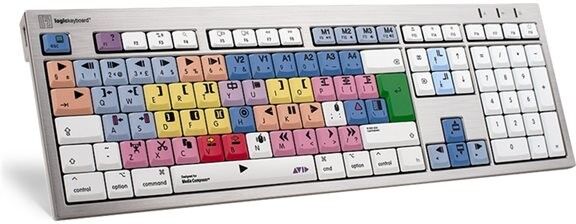
Logic Keyboards Avid Media Composer Slimline UKSpecialized keyboard designed for Avid Media Composer with UK layout and integrated numeric keypad. Wired USB connection includes dual USB 2.0 hubs for peripheral connectivity. Compatible with Windows 7 through Windows 11.138,99 £*Shipping: 0,00 £Secure redirect to the provider
-
Logic Keyboards Avid Media Composer ALBA SilverWired keyboard optimized for Avid Media Composer with 109 keys and integrated USB hub. Features classic Mac layout with UK QWERTY localization and numeric keypad. Slim aluminum construction weighing 840g.136,49 £*Shipping: 0,00 £Secure redirect to the provider
-
Logic Keyboards Media Composer TITAN Keyboard MulticolourHigh-performance keyboard for Avid Media Composer featuring 110 keys with classic layout and customized hot keys for video editing efficiency. Supports wireless (Bluetooth 5.1) and wired USB connections with 5-level backlighting and numeric keypad. Slim profile (43 x 11.9 x 1.3 cm, 580g) with UK QWERTY layout and 1-year warranty.144,49 £*Shipping: 0,00 £Secure redirect to the provider
-
Logic Keyboards Avid Media Composer Astra 2 BlackSpecialized keyboard designed for Avid Media Composer with 109 keys, 5-level backlighting, and integrated USB hub. Features wired connectivity, numeric keypad, and classic layout optimized for Windows editing workflows. QWERTY UK layout.144,49 £*Shipping: 0,00 £Secure redirect to the provider



-
Why do ethers have only weak dipole-dipole interactions?
Ethers have only weak dipole-dipole interactions because the oxygen atom in the ether molecule is less electronegative than the oxygen atom in alcohols or the nitrogen atom in amines. This results in a smaller difference in electronegativity between the oxygen and the carbon atoms in the ether molecule, leading to weaker dipole moments. As a result, the overall dipole-dipole interactions in ethers are weaker compared to molecules with larger electronegativity differences, such as alcohols and amines. **
-
Why is CO2 not a dipole and H2O a dipole?
CO2 is not a dipole because it has a linear molecular geometry, meaning the two oxygen atoms are symmetrically arranged around the central carbon atom, resulting in a net dipole moment of zero. On the other hand, H2O is a dipole because it has a bent molecular geometry, causing the oxygen atom to pull the shared electrons closer to itself, resulting in a net dipole moment. This uneven distribution of charge creates a positive end (the hydrogen atoms) and a negative end (the oxygen atom), making H2O a polar molecule. **
-
Is the ammonia molecule a dipole or not a dipole?
The ammonia molecule is a dipole. This is because the molecule has a trigonal pyramidal shape with a lone pair of electrons on the nitrogen atom. The electronegativity difference between nitrogen and hydrogen causes the molecule to have a net dipole moment, with the nitrogen end being partially negative and the hydrogen end being partially positive. This makes ammonia a polar molecule. **
-
What is the difference between dipole-dipole forces and hydrogen bonds?
Dipole-dipole forces are attractive forces between the positive end of one polar molecule and the negative end of another polar molecule. These forces occur between any two polar molecules and are relatively weaker than hydrogen bonds. On the other hand, hydrogen bonds are a specific type of dipole-dipole force that occurs between a hydrogen atom bonded to a highly electronegative atom (such as oxygen, nitrogen, or fluorine) and a lone pair of electrons on another highly electronegative atom. This type of bond is stronger than regular dipole-dipole forces and is responsible for the unique properties of water and other molecules with hydrogen bonding. **


When do Van der Waals forces and dipole-dipole interactions occur?
Van der Waals forces occur between all atoms and molecules, regardless of their polarity, due to temporary fluctuations in electron distribution. Dipole-dipole interactions, on the other hand, occur between polar molecules that have a permanent separation of positive and negative charges. Both types of interactions are important in determining the physical properties of substances, such as their boiling and melting points, and play a significant role in the behavior of gases, liquids, and solids. **
What is the difference between hydrogen bonding and dipole-dipole interactions?
Hydrogen bonding is a specific type of dipole-dipole interaction that occurs between a hydrogen atom bonded to a highly electronegative atom (such as oxygen, nitrogen, or fluorine) and another electronegative atom in a different molecule. This type of interaction is stronger than regular dipole-dipole interactions because of the large electronegativity difference between the hydrogen and the other atom, resulting in a stronger attraction between the molecules. In contrast, dipole-dipole interactions occur between the positive end of one polar molecule and the negative end of another polar molecule, but do not involve a hydrogen atom bonded to a highly electronegative atom. **
Top-Angebote
Products related to Dipole:
-
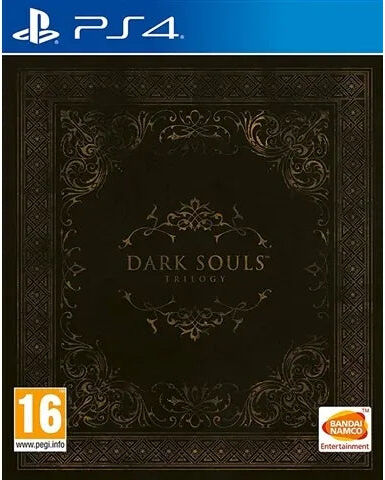
Dark Souls Trilogy (No Soundtrack) PS4, Used - Good.gadcet-pdp{--g-green:#00a651;color:#1f2430;line-height:1.55;font-size:inherit;max-width:760px}.gadcet-pdp>*:first-child{margin-top:0}.gadcet-pdp p{margin:0 0.9em}.gadcet-pdp h3{font-size:1.05em;font-weight:600;color:#11161f;margin:1.4em 0.5em;padding-left:.5em;border-left:3px solid var(--g-green);border-radius:0;line-height:1.3}.gadcet-pdp ul{list-style:none!important;margin:0 0.9em;padding:0!important}.gadcet-pdp ul li{position:relative;padding:.1em 0.1em 1.5em;margin:0}.gadcet-pdp ul li::before{content:"";position:absolute;left:.16em;top:.45em;width:.36em;height:.66em;border:solid var(--g-green);border-width:0.14em.14em 0;transform:rotate(45deg)}.gadcet-pdp table{width:100%;border-collapse:collapse;margin:.3em 0 1em;font-size:.95em;border:1px solid #e7e9ee!important;border-radius:8px;overflow:hidden}.gadcet-pdp table td{padding:.5em.8em;border-bottom:1px solid #eef0f4!important;vertical-align:top}.gadcet-pdp table tr:last-child td{border-bottom:0!important}.gadcet-pdp table tr:nth-child(even){background:#f7f9f8}.gadcet-pdp table td:first-child{font-weight:600;color:#454c59;width:40%}@media (max-width:600px){.gadcet-pdp table td:first-child{width:42%}} Take on three demanding fantasy action RPG adventures with Dark Souls Trilogy for PlayStation 4. Explore haunting worlds, master tactical combat and face formidable bosses across the complete trilogy. Key Features Includes Dark Souls Remastered, Dark Souls II: Scholar of the First Sin and Dark Souls III: The Fire Fades Edition Strategic real-time combat using weapons, shields, magic and abilities Deep character progression with customisable attributes, equipment and playstyles Interconnected fantasy worlds filled with castles, dungeons, ruins and hidden secrets Online co-operative and competitive multiplayer features New Game Plus modes and multiple character builds for added replay value Games-only edition with no official soundtrack included Benefits Enjoy the full Dark Souls journey in one PS4 collection Rewarding exploration and challenging battles for action RPG fans Choose between New and Used - Good condition options Specifications Platform PlayStation 4 Genre Fantasy action RPG Format Physical game Included games Dark Souls Remastered; Dark Souls II: Scholar of the First Sin; Dark Souls III: The Fire Fades Edition Soundtrack Not included Available conditions New or Used - Good What You'll Receive Dark Souls Trilogy for PlayStation 4 in your selected condition. This is the games-only edition and does not include the official soundtrack. Ideal For Ideal for PlayStation players who enjoy demanding combat, atmospheric fantasy worlds, character progression and exploration-driven action RPGs.42,99 £*Shipping: 0,00 £Secure redirect to the provider
-
RCR Crystal - Orchestra Glassware Set Clear 290mlAdd stunning Italian style and sophistication to your home bar or restaurant with this 24 24-piece orchestra Glassware Set from RCR Crystal. Since 1967 RCR Crystal has dedicated itself to the pursuit of cutting-edge, high-performance glassware, all produced from the company's headquarters in the heart of Tuscany. The Orchestra range stands as a testament to the brand's philosophy and heritage, with a beautiful cut glass decoration that lends a vintage, art deco-inspired aesthetic to any dining table. Each piece in this collection has been crafted from RCR's special Luxion® glass - an eco-friendly material that boasts exceptional clarity and shine, high resistance to shock and impact, and perfect acoustics. Luxion® has also been tested for over 4,000 washes in professional dishwashers without even a hint of clouding, so you can be confident that these glasses will stand as a sparkling centerpiece in your glassware collection for years to come! This set comprises 6 Wine Glasses, 6 Champagne Flutes, 6 Highball Glasses, and 6 Whiskey Glasses - your complete drinking glassware collection! RCR91,99 £*Shipping: 0,00 £Secure redirect to the provider
-
Logic Keyboards Avid Media Composer Slimline UKSpecialized keyboard designed for Avid Media Composer with UK layout and integrated numeric keypad. Wired USB connection includes dual USB 2.0 hubs for peripheral connectivity. Compatible with Windows 7 through Windows 11.138,99 £*Shipping: 0,00 £Secure redirect to the provider
-
Logic Keyboards Avid Media Composer ALBA SilverWired keyboard optimized for Avid Media Composer with 109 keys and integrated USB hub. Features classic Mac layout with UK QWERTY localization and numeric keypad. Slim aluminum construction weighing 840g.136,49 £*Shipping: 0,00 £Secure redirect to the provider
-
How do dipole-dipole forces affect the boiling temperature?
Dipole-dipole forces are attractive forces between the positive end of one polar molecule and the negative end of another polar molecule. These forces cause the molecules to be attracted to each other and stick together, making it more difficult for them to break apart and become a gas. As a result, substances with stronger dipole-dipole forces will have higher boiling temperatures because more energy is required to overcome these attractive forces and turn the substance into a gas. Therefore, the presence of dipole-dipole forces can increase the boiling temperature of a substance. **
-
Why are hydrogen bonds stronger than dipole-dipole interactions?
Hydrogen bonds are stronger than dipole-dipole interactions because they involve a specific interaction between a hydrogen atom and a highly electronegative atom such as oxygen, nitrogen, or fluorine. This creates a strong partial positive charge on the hydrogen atom and a strong partial negative charge on the electronegative atom, leading to a strong attraction between the two. In contrast, dipole-dipole interactions occur between the partial positive and negative charges of polar molecules, which are generally weaker than the specific interaction between a hydrogen atom and a highly electronegative atom in a hydrogen bond. **
-
Why do ethers have only weak dipole-dipole interactions?
Ethers have only weak dipole-dipole interactions because the oxygen atom in the ether molecule is less electronegative than the oxygen atom in alcohols or the nitrogen atom in amines. This results in a smaller difference in electronegativity between the oxygen and the carbon atoms in the ether molecule, leading to weaker dipole moments. As a result, the overall dipole-dipole interactions in ethers are weaker compared to molecules with larger electronegativity differences, such as alcohols and amines. **
-
Why is CO2 not a dipole and H2O a dipole?
CO2 is not a dipole because it has a linear molecular geometry, meaning the two oxygen atoms are symmetrically arranged around the central carbon atom, resulting in a net dipole moment of zero. On the other hand, H2O is a dipole because it has a bent molecular geometry, causing the oxygen atom to pull the shared electrons closer to itself, resulting in a net dipole moment. This uneven distribution of charge creates a positive end (the hydrogen atoms) and a negative end (the oxygen atom), making H2O a polar molecule. **
Similar search terms for Dipole
-
Logic Keyboards Media Composer TITAN Keyboard MulticolourHigh-performance keyboard for Avid Media Composer featuring 110 keys with classic layout and customized hot keys for video editing efficiency. Supports wireless (Bluetooth 5.1) and wired USB connections with 5-level backlighting and numeric keypad. Slim profile (43 x 11.9 x 1.3 cm, 580g) with UK QWERTY layout and 1-year warranty.144,49 £*Shipping: 0,00 £Secure redirect to the provider
-
Logic Keyboards Avid Media Composer Astra 2 BlackSpecialized keyboard designed for Avid Media Composer with 109 keys, 5-level backlighting, and integrated USB hub. Features wired connectivity, numeric keypad, and classic layout optimized for Windows editing workflows. QWERTY UK layout.144,49 £*Shipping: 0,00 £Secure redirect to the provider
-
Logic Keyboards Media Composer ASTRA 2 Keyboard MulticolourClassic layout keyboard for Avid Media Composer featuring 109 keys with 5-level backlighting and integrated USB hub for additional connectivity. Wired USB connection with multimedia hot keys and numeric keypad optimized for Mac-based video editing. Larger footprint (44.6 x 15 x 3 cm, 950g) provides ergonomic layout for professional workflows.144,49 £*Shipping: 0,00 £Secure redirect to the provider
-
Logic Keyboards Media Composer ASTRA 2 Keyboard BlackProfessional keyboard for Media Composer on Windows platforms with 109 keys in pro layout and 5-level backlighting. Wired USB connection with integrated USB hub and numeric keypad for efficient editing control. Robust construction (44.6 x 15 x 3 cm, 950g) with 1-year manufacturer warranty.144,49 £*Shipping: 0,00 £Secure redirect to the provider
-
Is the ammonia molecule a dipole or not a dipole?
The ammonia molecule is a dipole. This is because the molecule has a trigonal pyramidal shape with a lone pair of electrons on the nitrogen atom. The electronegativity difference between nitrogen and hydrogen causes the molecule to have a net dipole moment, with the nitrogen end being partially negative and the hydrogen end being partially positive. This makes ammonia a polar molecule. **
-
What is the difference between dipole-dipole forces and hydrogen bonds?
Dipole-dipole forces are attractive forces between the positive end of one polar molecule and the negative end of another polar molecule. These forces occur between any two polar molecules and are relatively weaker than hydrogen bonds. On the other hand, hydrogen bonds are a specific type of dipole-dipole force that occurs between a hydrogen atom bonded to a highly electronegative atom (such as oxygen, nitrogen, or fluorine) and a lone pair of electrons on another highly electronegative atom. This type of bond is stronger than regular dipole-dipole forces and is responsible for the unique properties of water and other molecules with hydrogen bonding. **
-
When do Van der Waals forces and dipole-dipole interactions occur?
Van der Waals forces occur between all atoms and molecules, regardless of their polarity, due to temporary fluctuations in electron distribution. Dipole-dipole interactions, on the other hand, occur between polar molecules that have a permanent separation of positive and negative charges. Both types of interactions are important in determining the physical properties of substances, such as their boiling and melting points, and play a significant role in the behavior of gases, liquids, and solids. **
-
What is the difference between hydrogen bonding and dipole-dipole interactions?
Hydrogen bonding is a specific type of dipole-dipole interaction that occurs between a hydrogen atom bonded to a highly electronegative atom (such as oxygen, nitrogen, or fluorine) and another electronegative atom in a different molecule. This type of interaction is stronger than regular dipole-dipole interactions because of the large electronegativity difference between the hydrogen and the other atom, resulting in a stronger attraction between the molecules. In contrast, dipole-dipole interactions occur between the positive end of one polar molecule and the negative end of another polar molecule, but do not involve a hydrogen atom bonded to a highly electronegative atom. **
* All prices are inclusive of VAT and, if applicable, plus shipping costs. The offer information is based on the details provided by the respective shop and is updated through automated processes. Real-time updates do not occur, so deviations can occur in individual cases. ** Note: Parts of this content were created by AI.